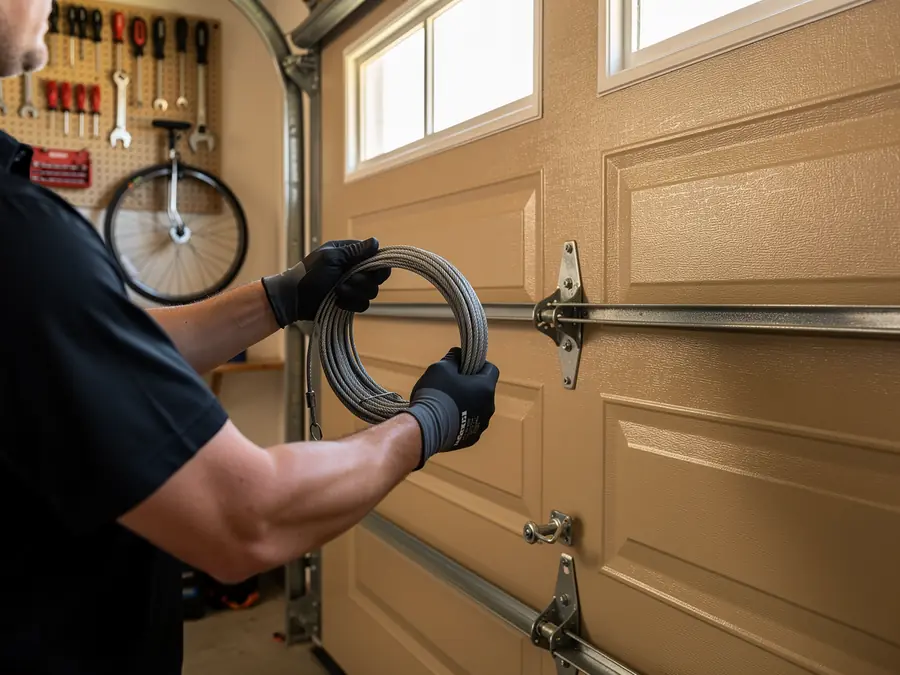
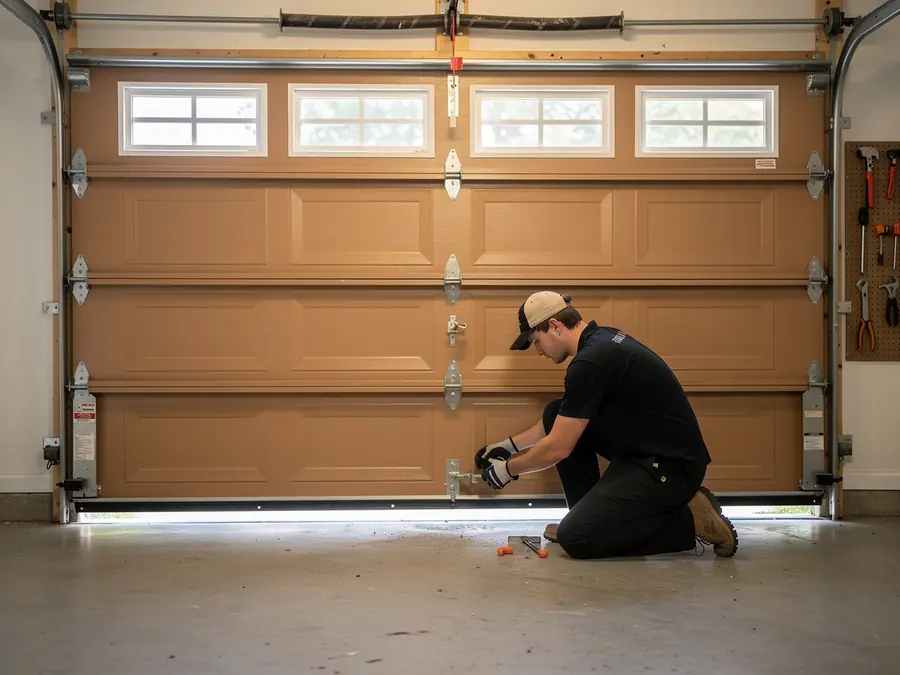
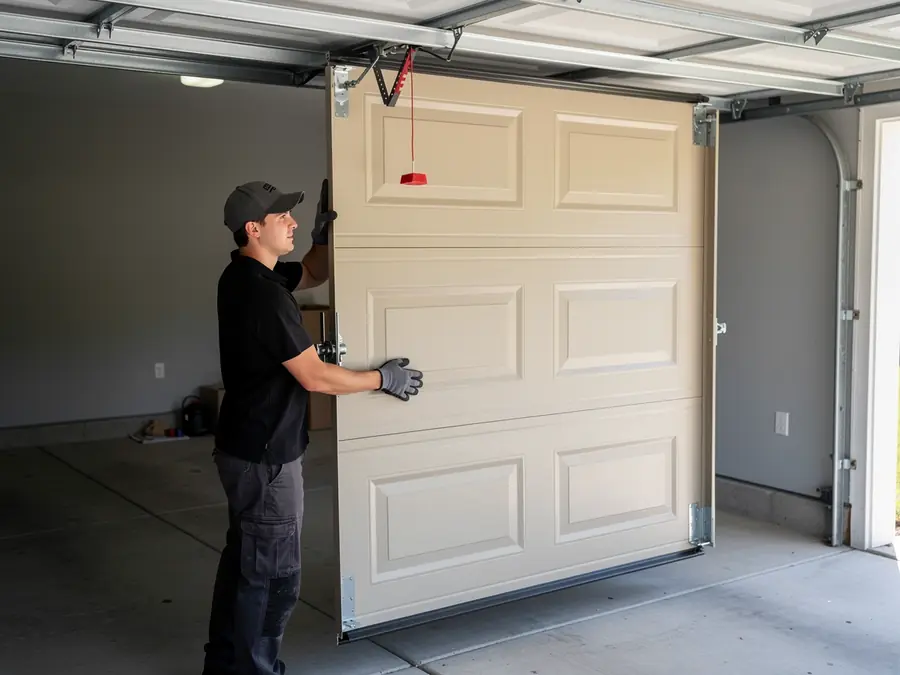
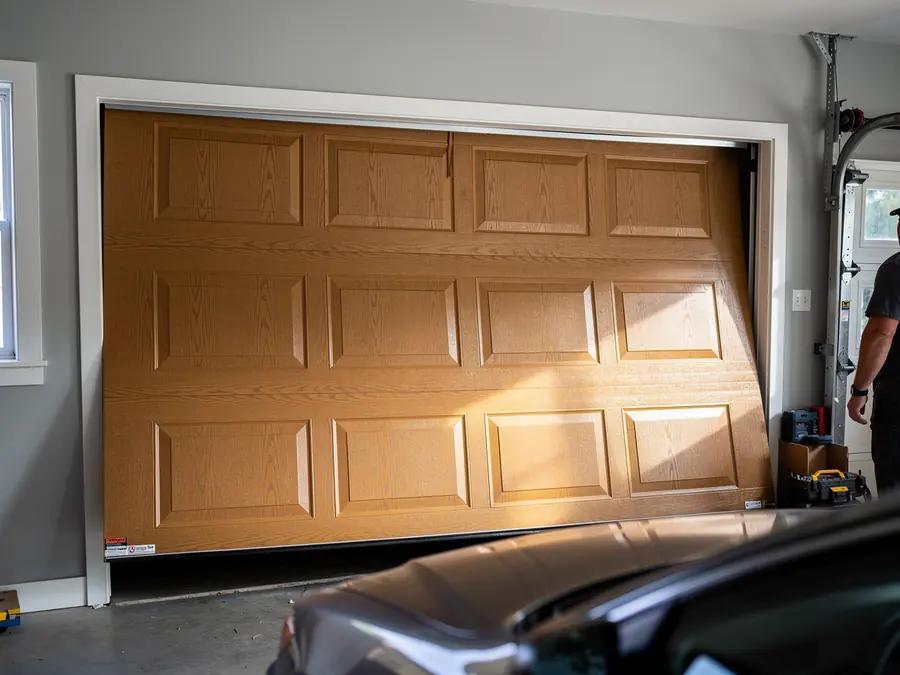
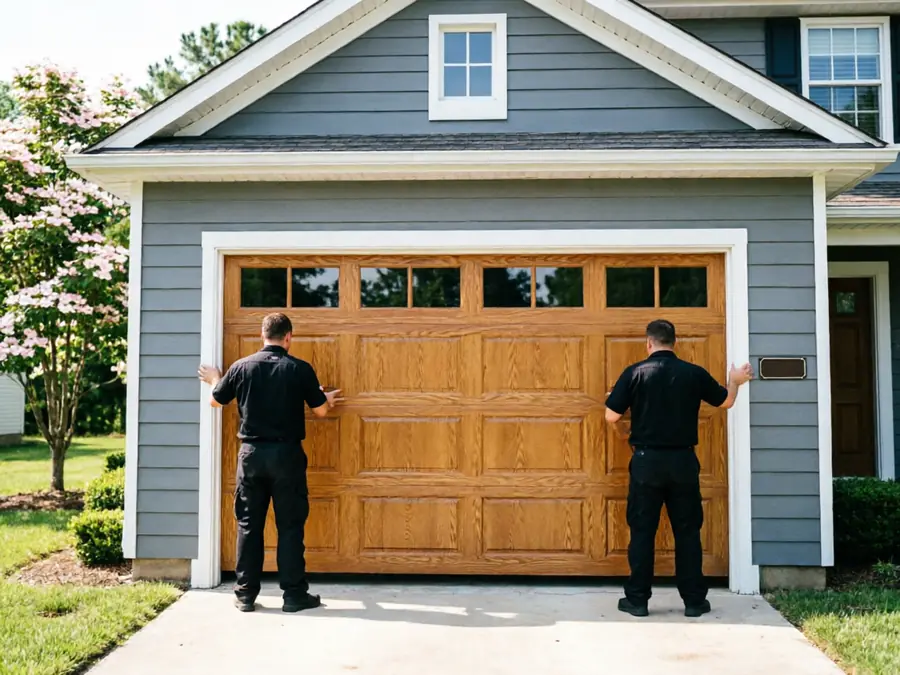
Installation starts with measuring the actual opening, not trusting the builder spec from 1995 - framing settles and shifts over almost thirty years, and we've found openings here that drifted enough to need shimming before a new door will sit square. From there we size the torsion spring to the real weight of the door you're installing, not the one that came out, since upgrading to an insulated panel changes that number.
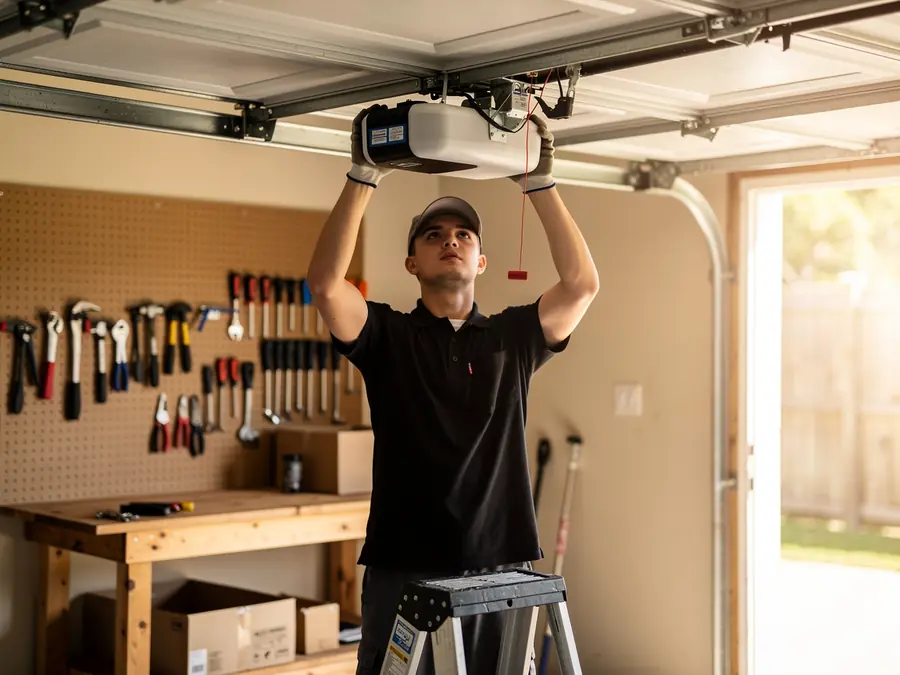
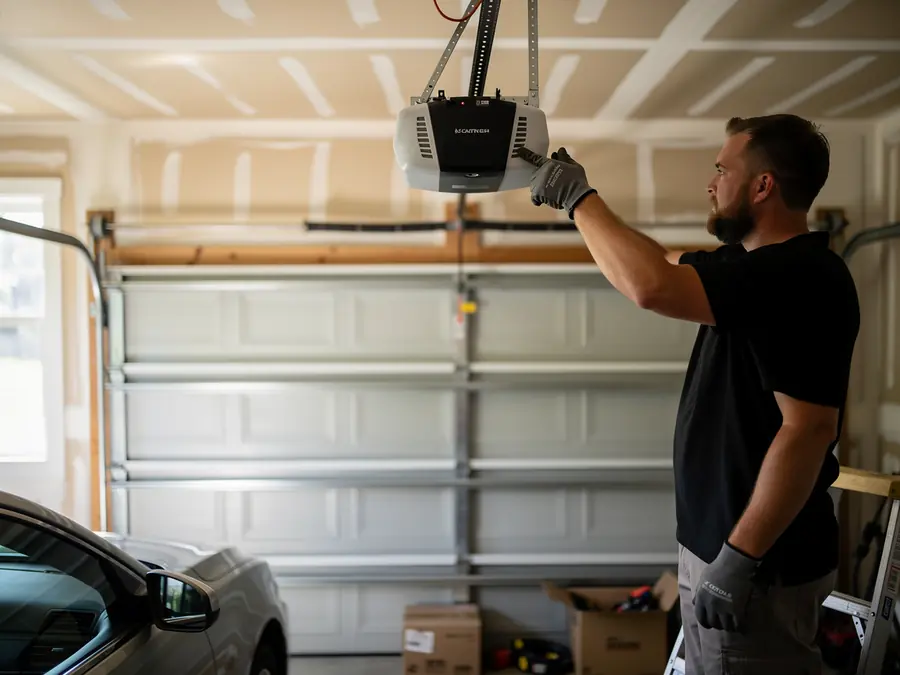
Once the door's hung, we set the track and limits, then move to the opener - checking that the wiring and safety reversal sensors meet current code rather than whatever was standard when the house was built. Given the COLD moderate climate here, we pay particular attention to the bottom seal and threshold, since that's the gap that lets cold air into an attached garage all winter. We test the balance by hand before we test it with the opener, because a door that isn't balanced will burn out a new opener motor inside a year regardless of how good the opener is.