Blog
What a Service Call Actually Covers in Smyrna
Smyrna homes built mostly in the 1960s-70s mean specific spring, track, and opener issues. Here's what a real service call checks and why it costs what it does.
What Is Going On
Most of the houses we get called to in Smyrna went up between 1951 and 2004, with the bulk of that stock clustered in the 1960s and 70s. That matters because a door built on a house from that era usually has the original torsion hardware, or a replacement from decades back that was matched to specs nobody uses anymore. When we show up for a service call, we're not just looking at the door panel - we're checking the spring size against the door weight, the track alignment against a foundation that's settled for fifty-plus years, and the opener's age against whatever bracket or rail system was bolted in at the time.
A service call starts with diagnosis, not a swap. We check the springs (tension and wear), the cables, the rollers, the track plumb, the opener's force settings, and the photo-eye alignment. On a lot of the 1960s-70s builds we see around Smyrna and nearby Vinings, Fair Oaks, and Cumberland, the springs are undersized for the door that's been hung on them over the years - sometimes a heavier insulated replacement panel went on a spring rated for the lighter original. That's the kind of thing you only catch by actually inspecting, not guessing from the driveway.
What the Weather Here Does to It
Smyrna sits in a cold-moderate climate band, which means the garage isn't dealing with extreme heat swings or hard freezes most of the year, but it does see enough temperature and humidity change to affect steel hardware over decades. On a door that's been in service since the 1970s median build year, that's forty-plus years of expansion and contraction on torsion springs and track bolts. We see rust creep on cables and hinges that haven't been lubricated in years, and track brackets that have worked loose from repeated thermal movement rather than any single storm event.
This isn't a climate that destroys doors fast. It's a climate that wears them slowly, which is why a lot of the calls we run are on doors that have been "fine" for years and then fail all at once - usually a spring that finally lets go, not a sudden weather event. A service call in this climate band is as much about catching metal fatigue before it snaps as it is about fixing something already broken.
The Cost of This Job
We don't post a flat number here because what a service call runs depends on what we find once we're in the garage - a spring replacement is a different job than a track realignment or an opener logic board. What we can tell you is that across the Smyrna service area, with 52,517 owner-occupied houses and a median household income around $70,101, most of the work we do is repair and tune-up on existing hardware rather than full door replacement. That's partly the age of the housing stock and partly that a straight repair on 1960s-70s era hardware is usually the more sensible call than tearing out a track system that's still square.
Where cost jumps is when the original hardware is so old that matching parts aren't stocked anymore - a specific spring wind or an obsolete track width. At that point we're honest with you: sometimes replacing the whole assembly costs less than hunting down a part that's been out of production for twenty years.
What Most People Get Wrong
The biggest mistake we see in Smyrna is someone hearing a loud bang or a door that drops fast and assuming the opener is broken. Almost always, on a house built in that 1951-2004 window, it's the torsion spring - the opener is just the part doing the visible work when the spring stops holding the door's weight. Replacing an opener motor on a spring problem fixes nothing and burns out the new opener trying to lift a door it was never built to lift alone.
The second mistake is waiting. A spring that's starting to sag or a cable that's starting to fray on a forty-to-sixty-year-old door doesn't get better with time in this climate - it gets worse, and it tends to fail without much warning. One thing we won't do is replace a spring in isolation on a door where the cables and rollers are clearly at the same age and condition; if one part's worn, the rest usually is too, and doing it piecemeal just means another call in a year.
Questions
Common questions
Why does the age of my house matter for a garage door repair?
Because houses in the Smyrna area built mostly in the 1960s and 70s often still have original or early-replacement torsion hardware. Spring sizing, track width, and bracket styles from that era don't always match what's sold today, so diagnosis has to account for what's actually installed, not a generic modern setup.
Does Smyrna's climate cause garage door problems?
Not in dramatic ways - this is a cold-moderate band, not an extreme one. But decades of seasonal temperature and humidity change wear down torsion springs, cables, and bolts gradually. On a door that's been in place since the median 1978 build year, that slow fatigue is usually the real cause of a sudden failure.
Is it ever better to replace than repair?
Yes, when the hardware is old enough that matching parts aren't made anymore, or when multiple components - spring, cables, rollers - are failing together. At that point, a full replacement can cost less than chasing down obsolete parts piece by piece.
What does a basic service call include?
We inspect the springs, cables, rollers, track alignment, opener force settings, and photo-eye alignment before touching anything. On older Smyrna-area homes, that inspection usually turns up which single worn part is about to cause a bigger failure.
Recommendation
You Might Also Like
More garage door guides for Smyrna homeowners.
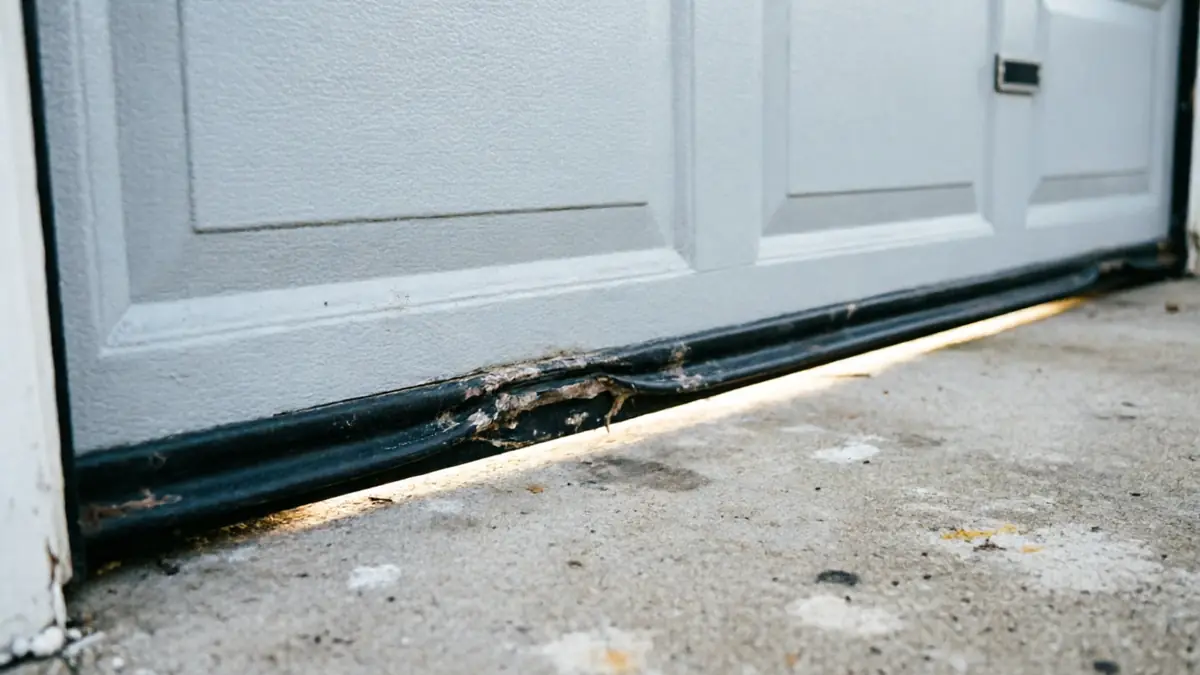
Why Your Garage Door Leaks Air in Smyrna
Smyrna homes built mostly in the 1960s-70s lose weather seals early.
Read guide
Is Your Smyrna Garage Door Worth Fixing, or Worth Replacing
In Smyrna, GA, homes built between 1951 and 2004 mean a wide mix of garage door ages.
Read guide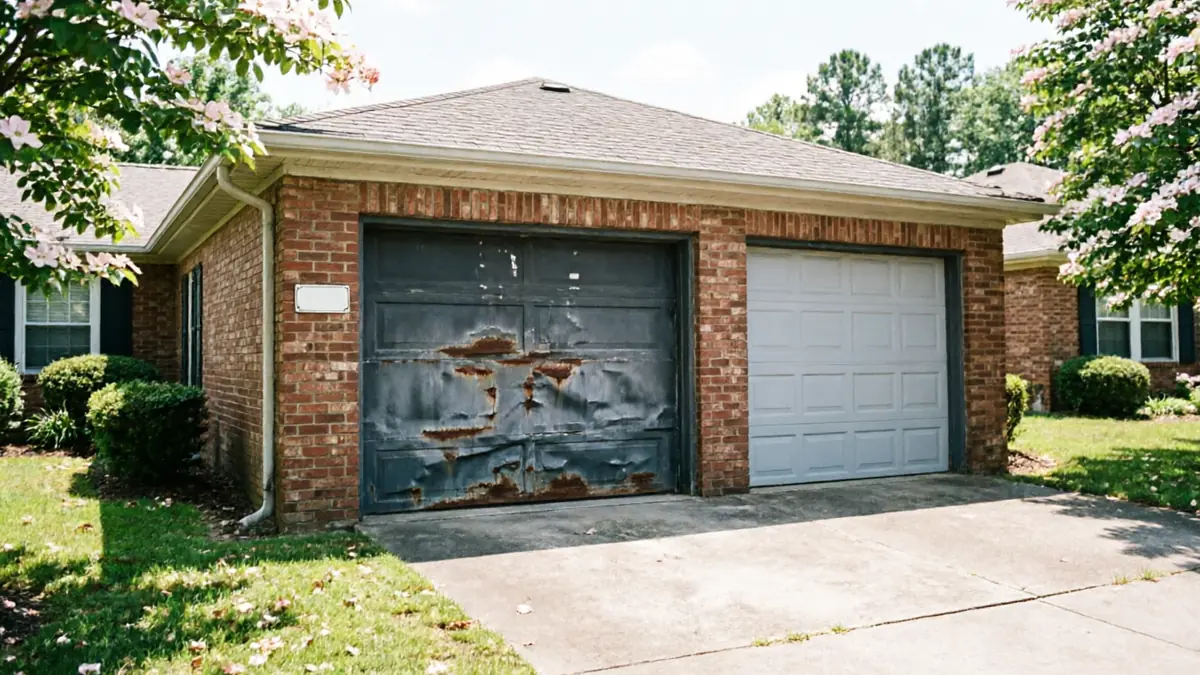
Why Your Garage Door Jumped the Track
Smyrna's older housing stock and cold-moderate swings both play a part in off-track doors.
Read guideReady when you are
Need a garage door sorted in Smyrna?
Smyrna Garage Door Pros repairs and installs garage doors, springs and openers in Smyrna, GA and the surrounding area.