
Blog
Why Your Garage Door Jumped the Track
Smyrna's older housing stock and cold-moderate swings both play a part in off-track doors. Here's what's really happening and what it costs to fix it right.
What Is Going On
An off-track door almost never happens in one dramatic moment. A roller wears thin, a bracket backs out a quarter inch, a cable frays at the drum, and the door starts riding crooked for weeks before it finally jumps the rail. Most of the houses on this side of Smyrna went up between 1960 and 1980, inside the broader 1951 to 2004 window that covers the area, and that matters here because the track hardware from that era is galvanized steel on brackets lagged straight into the framing. Nobody re-torques those lag bolts. Over forty-plus years of door cycles, the wood around them compresses, the bracket shifts a hair with every open and close, and eventually the track pulls just far enough out of plumb that a roller pops free on the way down. With 52,517 owner-occupied houses across this service area, a lot of those garages still carry the track brackets installed when the house was framed, not a replacement set. If your door bangs, hesitates, or leans to one side right before it leaves the rail, that's the bracket pulling loose, not a bent track you can hammer straight and forget about.
What the Weather Here Does to It
Smyrna sits in a cold-moderate climate band, not the deep freeze you'd get further north, but enough swing between a cold night and a mild afternoon to work on steel and wood all winter long. That freeze-thaw cycling loosens track bolts year after year in a way a stable climate never would - metal contracts overnight, the wood framing holds its shape a little differently, and the fasteners walk loose a fraction of a turn at a time. It's slow, and it's the kind of thing you don't notice until the door is already riding off-square. Humidity swings do the rest: condensation on the track in a cold garage invites surface rust right where the roller rides, which roughens the rail and makes a marginal track even less forgiving. None of this breaks a door outright. It just removes the margin a thirty- or forty-year-old track system had left, so the next minor bump - a kid's bike against the door, a slightly overdue spring - is the thing that finally pushes it off the rail.
The Cost of This Job
I'm not going to put a number here that doesn't hold up once I've actually looked at the track. An off-track door can be a twenty-minute realignment if the rail itself is straight and it's just the bracket that walked loose, or it can mean a new section of track and a pair of rollers if the rail got bent on the way down - and those are very different jobs. In a service area with a median household income of $70,101, most people I talk to want it straightened out and working again rather than paying for a full track replacement, and that's usually the right call if the rail isn't bent or crimped. Where it isn't the right call is a track that's been forced back into place more than once already; at that point you're paying labor twice to delay a job that needed doing the first time. I'll tell you straight which one you're looking at before any work starts, not after.
What Most People Get Wrong
The instinct is to grab the track with both hands and bend it back toward the door. Sometimes that works for an afternoon. It also work-hardens the steel right at the bend, which means it fails again, usually sooner and usually worse, because that spot is now the weakest point in the whole rail. The other mistake is treating every off-track door the same way. Houses built across the 1951 to 2004 window in this area used a mix of track gauges and bracket spacing, so a universal bracket kit from the hardware store often doesn't fit flush, and a loose fit is exactly how you end up back where you started in a month. The last thing people miss: an off-track door is a sign the spring and cable system is doing something it shouldn't, usually carrying more of the door's weight on one side than the other. Fix the track and ignore that imbalance, and you're setting up the next failure, not preventing it.
Questions
Common questions
Can I just push the door back onto the track myself?
You can try, but a door under spring tension can snap back hard, and if the track is bent rather than just knocked loose, forcing it back in place usually bends it further. If the door came off evenly on both sides, call before you pull on anything.
Is an off-track door always a track problem?
No. Often the track is fine and the real issue is a worn roller, a loose bracket, or uneven cable tension pulling the door crooked. Replacing the track without finding the actual cause means it happens again.
Does my garage's age matter for this repair?
Yes. Houses in this area built between the 1950s and early 2000s used different track gauges and bracket spacing, so parts aren't always interchangeable between a 1965 build and a 1995 build.
Recommendation
You Might Also Like
More garage door guides for Smyrna homeowners.
When a Spring Goes in Cold Weather: A Smyrna Homeowner's Guide
Why garage door springs snap in Smyrna's cold snaps, what it costs to fix given this area's 1960s-70s housing stock, and the mistakes homeowners make before calling.
Read guide
What Power Cuts Do to Garage Door Openers in Smyrna
How Smyrna's 1960s-70s housing stock and cold-moderate winters combine to knock out garage door openers during power cuts, and what actually fixes it.
Read guide
Why Your Garage Door Leaks Air in Smyrna
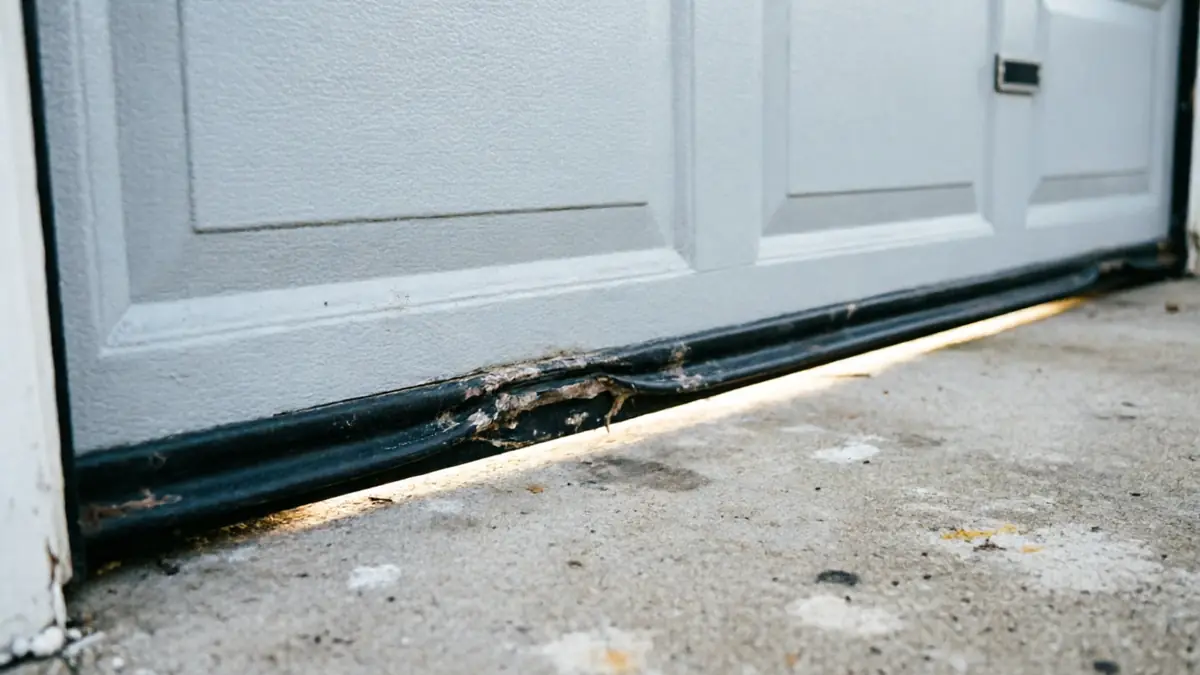
Smyrna homes built mostly in the 1960s-70s lose weather seals early.
Read guideReady when you are
Need a garage door sorted in Smyrna?
Smyrna Garage Door Pros repairs and installs garage doors, springs and openers in Smyrna, GA and the surrounding area.